


10 July 2026
Market TrendsItaly’s Organic Food Market Reaches €10.4 Billion
Italy’s organic food market is entering a new phase of growth, driven by demand that increasingly cuts across contemporary food habits. Organic responds to the need for well-being, the search for more recognisable ingredients, and growing attention to transparent supply chains and quality products.
Today’s consumer is looking for solutions aligned with a more conscious lifestyle. They want food that is easier to understand, more credible in its story, closer to new dietary needs. Organic has moved beyond the trend phase. The real challenge now is to become part of everyday purchasing habits, as a stable, accessible choice.
The organic food market is growing, but still developing
Organic is confirming a positive phase, supported by consumers increasingly attentive to ingredient quality, the origin of raw materials, supply chain transparency, and the impact of their food choices.
In Italy, the organic market reached an overall value of €10.4 billion in 2024, across retail, foodservice and exports. Recent dynamics confirm the sector’s strength: organic food sales for household consumption grew by 6.2%, while in large-scale retail organic is worth €3.5 billion, up 6.1% on 2024 and accounting for 64% of the domestic market. Exports also confirm the strength of Italian organic, with €3.5 billion in foreign sales and growth of 7%.
Italy has a strong production base and an excellent reputation abroad, but in modern retail organic still has room to grow in assortment depth, shelf visibility and the ability to speak to a broader audience. In many categories, the organic offer has not yet reached a presence proportionate to emerging demand. This is particularly clear in the market’s most dynamic segments, such as high-protein products, plant-based alternatives, free-from and functional solutions. This is precisely where organic can express new potential, as added value within dietary needs that are already well established.
Organic in large-scale retail
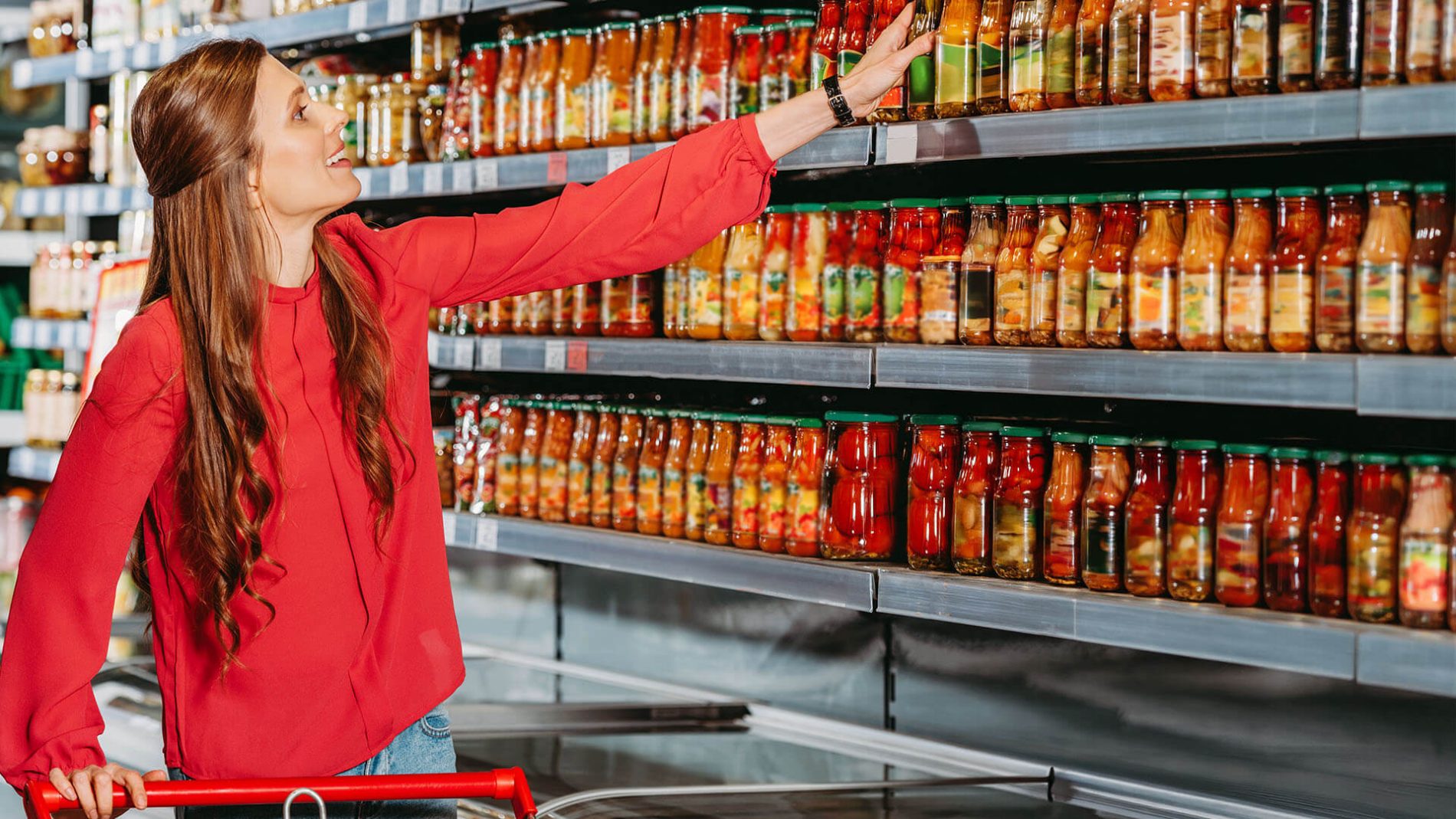
Modern retail can play a decisive role by integrating organic within individual product categories, rather than only in dedicated spaces. This allows for a more direct comparison with the conventional alternative and helps consumers see organic as a concrete, accessible choice.
Accessibility, though, is not only about price. Private label can help bring organic closer to everyday consumption, but the real step change also comes through clearer assortments, more contemporary packaging and less technical communication. Organic needs to explain its value more effectively, built on method, control, supply chain and certification, as much as on the final product. This is what sets it apart from many claims currently found on shelf. Organic is a regulated, recognisable system that can strengthen consumer trust when communicated more directly and clearly.
At the same time, organic needs to become more desirable. An organic product needs to be good, modern, well presented, and able to compete with conventional alternatives on the shopping experience too. Here, packaging, visual language and the ability to move beyond organic’s more traditional codes become decisive levers for strengthening perceived value and making the product more competitive on shelf.
Atlante’s vision: taking Italian organic beyond national borders
For Atlante, organic is a strategic segment, especially in international markets. In 2025, the company generated €290 million in turnover, of which around €6 million came from organic: still a selective share, but with promising growth prospects, particularly in exports.
It is precisely beyond national borders that Italian organic reveals one of its greatest opportunities. As Natasha Linhart, CEO, Founder and Commercial Director of Atlante, puts it: “Organic shows all its strength, especially when it comes to Italian specialities. Italy has an excellent reputation in this area, but the challenge is communicating it through a fresher, more contemporary language that speaks to a broader audience.”
This vision also translates into new projects. In Germany, Atlante is working on a line of Italian organic products with a dedicated brand and a more modern visual identity: BIOVIA. As Linhart explains: “By studying the German shelf, we developed an organic proposal that moves beyond some of organic’s more traditional codes and brings the category closer to new consumers.”
Pasta, legumes, tomato, pestos and sauces become tools for expressing a more current idea of quality and everyday consumption. For Atlante, the direction is clear: to build organic as a driver of innovation, with assortments able to speak to a broader audience.
Source: GDOWeek, Italian trade publication for large-scale retail, 15 March 2026 — gdoweek.it