


21 August 2026
Food FraudFood Fraud: Focus on Cured meats
Atlante’s Food Fraud Observatory focuses on the risks associated with products and categories. The goal? To raise awareness and help businesses operate with greater responsibility.
Framework
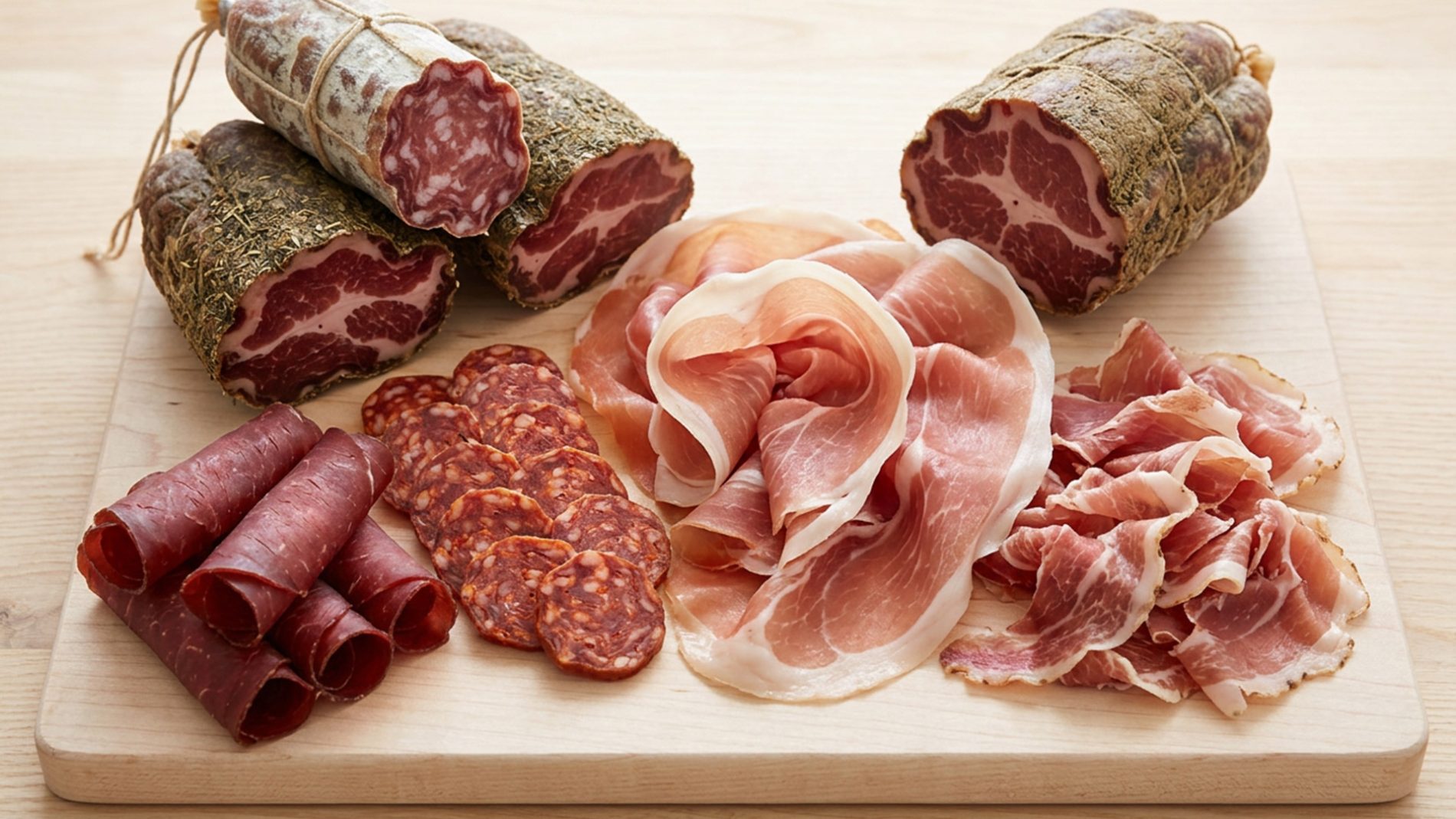
Cured meats are part of the Italian tradition. The term cured meat is used to indicate a meat product, usually pork, processed using various methods. Broadly speaking, cured meats are divided into cooked and raw, and include both whole anatomical cuts (such as hams) and products made by grinding meat and fat with the addition of spices. Salt, from which the Italian term salume derives, is not only responsible for the typical flavour but influences, particularly in raw products, the texture of the product and the survival and multiplication of microbial populations during the various production phases.
Dangers
The consumption of cured meats is notoriously linked to botulinum toxin intoxications (from the Latin botulus or sausage). To manage the risk associated with the presence of the bacterium Clostridium botulinum, in addition to the application of a series of preventive procedures (hygiene and quality of raw materials, process management), substances with an inhibitory effect (nitrates/nitrites) and spore germination are used. The use of nitrates/nitrites is controversial and is not allowed for some traditional transformation processes (e.g., Prosciutto di Parma DOP). Over the years, the definition of critical limits and the application of validation, monitoring, and control procedures permitted the control of botulinum risk.
Fraud Risk
The Italian cured meat sector is a high-value-added sector that produces excellent products appreciated worldwide. Export data show consistent growth. Abroad, numerous imitation attempts have been detected for iconic products (e.g. “Bologna sausage”), while in Italy, fraud is related to the use of meat not covered by production regulations (e.g. foreign meat or the use of other genetic types for DOPs). Cured meats obtained through fine shredding and cooking are those most exposed to the use of meat other than those declared (e.g. meat of lower commercial value, mechanically separated meat).
Mitigation and control
Fraud risk management is achieved through in-depth analysis of both the producer and analytical checks. In the relationship with production, managing raw material purchases is an absolutely central element. The visibility of the supply chain and rigorous information management are effective tools for fraud prevention. From an analytical perspective, several methods are available, the application of which depends on the type of fraud expected. For example, in the case of mechanically separated meat, EFSA identified correlation parameters between calcium content and mechanically separated meat content in the finished product.
The variety of Italian cured meats is an expression of the history and environment in which they were produced. For the delicatessen of the southern regions we find Greek and Latin influences with raw and savoury products (higher production temperatures). In the northern regions, raw meats are on average sweeter and in some cases smoked; cooked meats are part of a Celtic tradition of meat processing and preservation.