

7 October 2026
Senza categoriaHow Pasta and Sauces Are Evolving in 2026
Pasta remains a staple of the British weekly shop, valued for its affordability and versatility. But the category is evolving, as shoppers discover new shapes, explore regional flavours and look for quality ingredients that can turn an everyday meal into something special.
Philip Durham, our UK Business Unit Director, recently shared Atlante’s perspective on these developments in The Grocer’s pasta and sauces feature, exploring the opportunities for suppliers and retailers.
How Social Media Is Changing Pasta
Tiny shapes such as ditalini are having a real moment, often cooked in one-pan or risotto-style so the pasta absorbs the stock and sauce as it cooks. We’re also seeing pasta move beyond traditionally Italian flavour profiles, as highlighted by the rise in popularity of Turkish-style pasta.
The viral moment doesn’t have to be a sauce anymore, and can range from a shape to an ingredient or a cooking technique.
The challenge for suppliers is speed versus longevity. A recipe can become viral almost overnight, whereas bringing a product into a national retail range takes much longer. Rather than recreating every viral recipe as an SKU, suppliers should understand the consumer behaviour behind the trend.
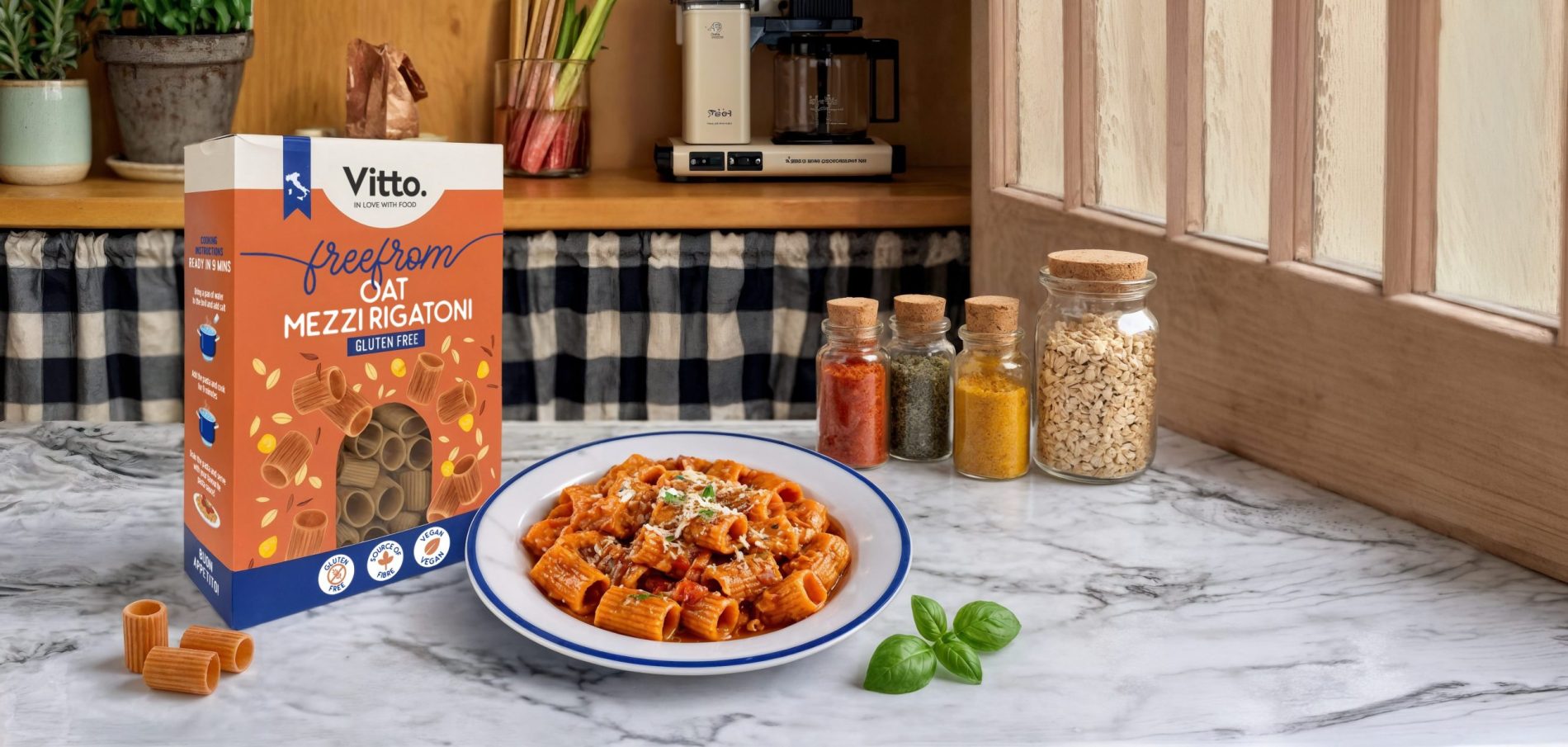
Earlier this year, for example, we launched Vitto gluten-free oat pasta into Sainsbury’s Free From aisle, offering shoppers an alternative to traditional wheat-based pasta. A gluten-free, high-protein or fibre-led proposition can encourage shoppers to try something new, but ultimately it still needs to deliver on the fundamentals: taste, texture and versatility.
More Choice in Pasta Sauces
We expect a shift away from a category dominated by red and white sauces towards more specific flavour profiles. There is room for more regional Italian flavours, from ’nduja and Calabrian chilli to pistachio pesto.
There is also an opportunity for products that sit between a traditional jarred sauce and cooking from scratch, allowing consumers to feel involved in creating the finished dish. Rather than simply buying “a pasta sauce”, consumers crave products suited to a particular dish, shape, flavour profile or occasion.
The Evolving Role of Brands and Own Label
Retailers now operate effective value ladders, allowing shoppers to trade up considerably while remaining within own label. This puts pressure on the middle of the branded market, prompting brands to offer something – innovation, expertise, ingredients – that neither core nor premium own label can easily replicate.
Own label doesn’t have to win purely on price anymore. It can also lead trends and create excitement in the category.
Core dried pasta remains a natural strength for own label. The opportunities for differentiation lie in premium dried pasta, specialist shapes, or premium sauces with a strong provenance story. One of the biggest recent shifts is that “premium” no longer necessarily means expensive. Pasta is uniquely well positioned for affordable premiumisation.
Why Italian Provenance Matters
Consumers’ increased knowledge of Italian products has made provenance more important. The conversation is therefore shifting from whether something is Italian to which tomatoes are used or how pasta is dried.
Consumers understand the value of bronze-cut pasta or a PDO cheese when they make a real difference to the finished dish. Provenance shouldn’t be just decoration on packaging. Rather, it should help explain quality and source.
Our role is often translating something that is popular in Italy, whether an ingredient or a regional recipe, and turning it into a proposition that resonates with UK shoppers.
Understanding the Pressures on Price
The two categories face different pressures. In its August forecast, the International Grains Council projected global durum supply to rise 6% to 48.4 million tonnes in 2026/27, with carry-out stocks expected to increase 20% to 10.7 million tonnes, helping to limit upside pressure on global durum prices.
Sauces arguably have even greater complexity because of their wider input basket. Tomatoes, olive oil, dairy, cheese, vegetables, herbs and glass can all face their own pressures, alongside the energy, labour and logistics costs affecting pasta.
There are three overlapping areas of risk: commodities and climate, geopolitics and trade policy. Changes in temperature, rainfall and climate volatility may affect agricultural production globally, potentially influencing pasta prices.
Disruption around the Strait of Hormuz is impacting the global energy and fertiliser markets. The UK has temporarily suspended tariffs on certain pasta and other food imports to mitigate food price pressures arising from the Middle East conflict.
A consumer might not want to eat out, but still be willing to spend an extra pound on better pasta or a premium sauce to enjoy a quality meal at home. This creates an interesting polarisation in the category, with strong value at one end and affordable indulgence at the other.
At Atlante, we connect Italian producers with the UK market, helping retailers develop pasta and sauce ranges that respond to changing shopper expectations. From specialist shapes and regional flavours to alternative pasta formats, our focus remains on the fundamentals: taste, texture and versatility, alongside quality and value.
